.png)
Trauma Stored in the Body: 7 Signs You’re Holding More Than You Realise
- Coralie Bengoechea

- Dec 15, 2025
- 5 min read
Updated: Dec 30, 2025
More people than ever are discovering that trauma isn’t just emotional, but gets stored in the body. Here’s how to recognise the subtle physical signs your nervous system is carrying more than you think.

Written by Coralie Bengoechea | 15 December 2025
We often talk about trauma as something that lives in memories or emotions, like a psychological story we carry. But the body has its own memory, and sometimes it speaks louder than the mind ever does.
Many people go years without realising that what they call “stress,” “tension,” or “just how I am” is actually the nervous system holding onto moments that were never fully processed. The body doesn’t forget; it waits for the right conditions to release what got stuck.
Here are seven signs your body may be carrying more than you realise. Understanding these will help you to slow down, pay attention, and reconnect.
1. A tightness or tension that never fully leaves

If your shoulders constantly creep upward, your stomach feels knotted for no clear reason, or your jaw is always slightly clenched, your body may be quietly bracing.
This isn’t simply bad posture. It’s the nervous system saying, “I’m still on alert.” People often don’t notice it until they experience true relaxation and realise how much they were holding.
2. Emotional waves that feel stronger than the moment

Everyone has reactions, but trauma-held emotions often surge in a way that doesn’t match the situation. A small disagreement, a tone of voice, a sudden noise, and your body reacts before you even understand why.
What’s happening is old emotional energy trying to complete itself. The present moment triggers a doorway, and the body steps through before you do.
3. Feeling disconnected or “far away” from your own body

Many who’ve dealt with overwhelming experiences learn to live in their minds instead of their bodies. You may notice you forget to eat, you lose track of physical sensations, or you feel numb when others feel emotional.
It’s not laziness or lack of awareness: it’s a survival strategy. The body distances you from feeling too much, too fast.
4. Struggling to truly rest, even when nothing is wrong

You sit down to relax, and your system won’t let you. Stillness feels uncomfortable. Pleasure feels difficult to sink into. Your mind stays alert even when the environment is calm.
This often comes from a body that learned long ago that rest wasn’t safe. Healing involves gently showing your system that things are different now.
5. Persistent body symptoms with no clear explanation

Trauma often shows up through the body’s softer channels like the gut, breath, muscles, immune system.
Common signs include:
digestive discomfort
chronic tiredness
frequent headaches
tight chest or shallow breathing
sudden drops in energy
tension that returns quickly after massage or stretching
These sensations aren’t random; they’re the nervous system trying to communicate.
6. Sensitivity to sound, touch, or conflict

If raised voices, sudden noises, or even light touch startle you more than others, your system may be primed to scan for danger.
This doesn’t mean you’re weak or “too sensitive.” It means your nervous system is finely attuned: a leftover from needing to protect yourself in the past.
7. Feeling stuck in the same patterns, even when you want change

Trauma doesn’t only live in the body as pain; it can also show up as patterns:
repeating familiar relationship dynamics
hesitating to take opportunities
self-sabotaging when things go well
feeling like you can’t move forward, even when you want to
It’s not that you don’t want change - it’s that your body is holding onto an old map of safety.
Why the body holds onto trauma

When something overwhelms your system, your body steps in to protect you. If you weren’t able to respond, express, or process what was happening at the time, that energy gets stored.
It becomes patterns of breath. Patterns of tension. Patterns of avoidance. Your body keeps trying to complete the protective response it never finished.
Somatic therapies work by helping the body finally complete those loops, gently, safely, without forcing you to relive the past.
Healing doesn’t mean revisiting the pain. It means teaching the body a new way to exist.

Healing trauma isn’t about forcing yourself to relive old memories or digging through every detail of the past. Real transformation happens when the body learns a new baseline - one that feels safe, steady, and less reactive.
Modern somatic approaches, breathwork, EMDR, mindful movement, Reiki, and trauma-aware meditation all work by helping the nervous system unwind patterns that were created during survival mode. Instead of focusing on the story, these practices focus on the felt sense - the breath, the muscles, the pace of the heartbeat, the subtle signals that tell your system whether it’s safe.
And you don’t need to plunge into the deep end to begin this process. Small, consistent actions can gently teach the body a new rhythm:
Slow, conscious breathing to interrupt stress responses.
Grounding techniques like feeling your feet on the earth, leaning into supportive surfaces, or noticing temperature and texture.
Micro-movements that invite frozen or tight areas to soften. Do exercises like rolling shoulders, gentle twists, shaking out tension.
Touch-based self-soothing, such as placing a hand on your chest or belly to signal safety.
Co-regulation with safe people: Being around calm, steady nervous systems that your body can mirror.
Practices of presence, like observing sensations without judgment, so the body learns that nothing overwhelming is happening right now.
Creative or expressive outlets, such as journaling, sound, or art, that allow unprocessed energy to move in healthier ways.
These kinds of practices slowly retrain the body to recognise the present moment instead of staying stuck in old patterns of protection. Healing becomes less about “fixing” and more about re-educating the nervous system: showing it again and again, through experience, “You’re safe now. You don’t have to brace anymore.”
Over time, the body learns to soften, to trust, and to live from a place of ease rather than survival.
If these signs feel familiar, be kind to yourself

Nothing is wrong with you. Your body adapted brilliantly to keep you safe.
Healing isn’t about forcing change: it’s about listening. Listening to the tightness under your breath. Listening to the heaviness behind your tiredness. Listening to the intelligence inside your sensations.
What your body holds, it can eventually release. It just needs the right support, patience, and presence.
Want to explore further?
Check out our guided meditations on our Akashic Tree YouTube channel: https://www.youtube.com/@AkashicTree
Join one of our courses or a retreat: https://www.akashictree.com/all-events
Book a private healing session with us: https://www.akashictree.com/services
Get in touch with us at info@akashictree.com
References & Further Reading
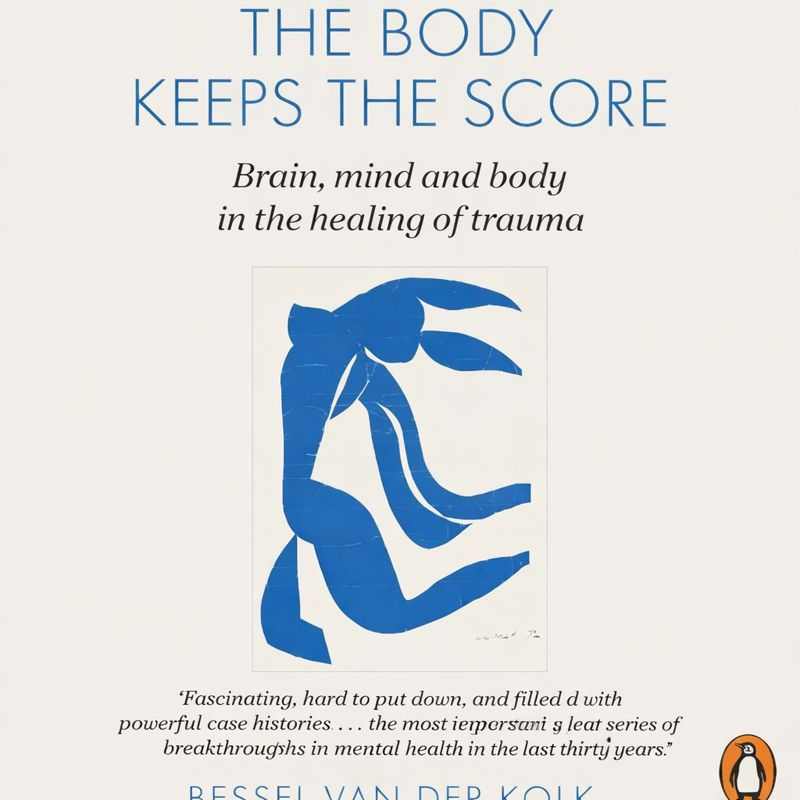
Bessel Van Der Kolk - The Body Keeps the Score: Brain Mind and Body in the Healing of Trauma - This book is fascinating, I highly recommend it!
Psych Central. (n.d.). How your body remembers trauma: https://psychcentral.com/health/how-your-body-remembers-trauma
Therapists in Philadelphia. (n.d.). Signs your body is releasing trauma: https://therapistsinphiladelphia.com/blog/signs-your-body-is-releasing-trauma/
D’Amore Mental Health. (n.d.). How trauma is stored in the body: https://damorementalhealth.com/resources/how-trauma-is-stored-in-the-body/


Comments